Ocean currents could benefit plant dispersal in the Caribbean: 2023 – 2026 (Kim et al., 2026)
Thalassochory, or dispersal by ocean currents, shapes island biogeographical processes. However, the potential of fleshy-fruited plants to utilize this dispersal method is understudied. As part of my PhD dissertation, we selected 14 fleshy-fruited species found in coastal Caribbean plant communities and assessed their thalassochoric dispersal potential by measuring the period over which they could both float and remain viable in saltwater. We then determined the thalassochoric connectivity between 37 Caribbean islands by analyzing the paths of 1198 drifter buoys that passed through the Caribbean between 1991 and 2019. We found a significant, positive trend for fruits with greater thalassochoric dispersal potential to be found on more islands and significant variation in the floating potential of Caribbean fleshy-fruited plants (0 to 90+ days), with the species with the greatest floating potential (Chrysobalanus icaco) feasibly being able to disperse viable seeds between the most geographically distant (2600 km) pair of islands in the Caribbean. However, we could not tie thalassochoric connectivity to either individual species distributions or community composition across our 14 fleshy-fruited species. As geographic distance, the isolation metric traditionally used in island biogeography studies, was also unable to explain these distribution patterns, and as human usage was identified as an alternative significant predictor of species range size, our results indicate the challenge associated with identifying drivers of distribution patterns across the Caribbean archipelagos. Therefore, we suggest future studies to examine: 1) plant germination and growth potential after fruit exposure to saltwater, and 2) genetic connectivity of fleshy-fruited plant populations and their correlation with thalassochoric connectivity metrics.
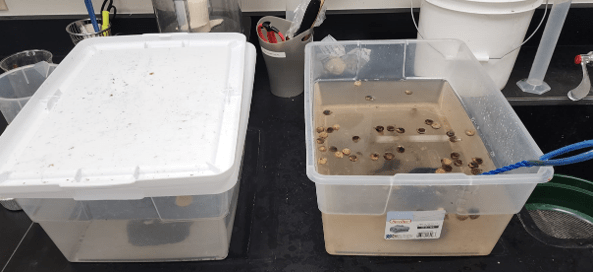
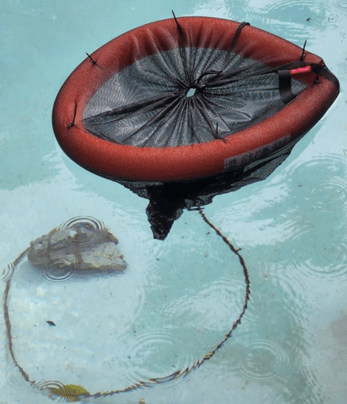
Apparatus used in our study
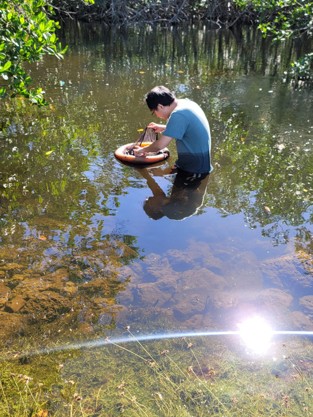
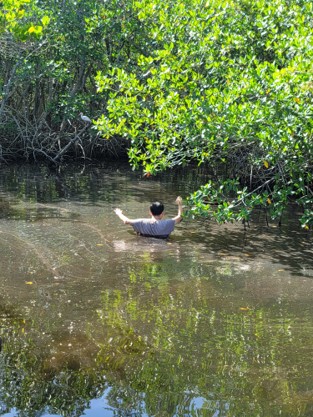
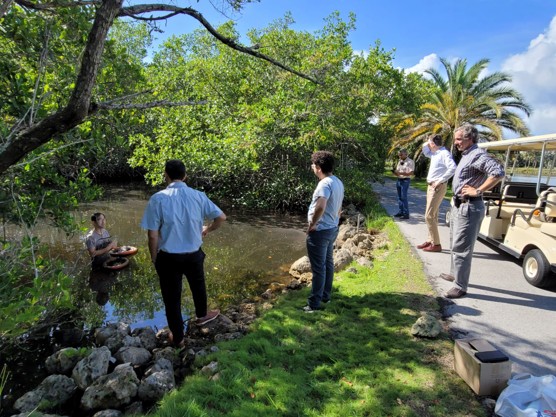
Collecting important data
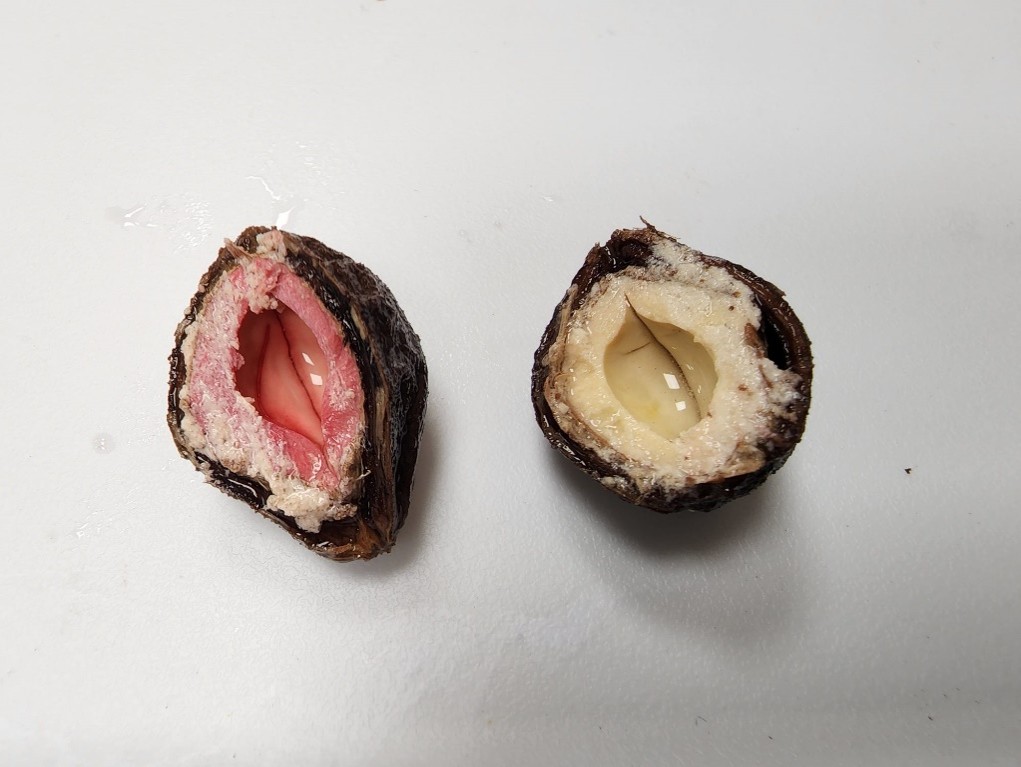
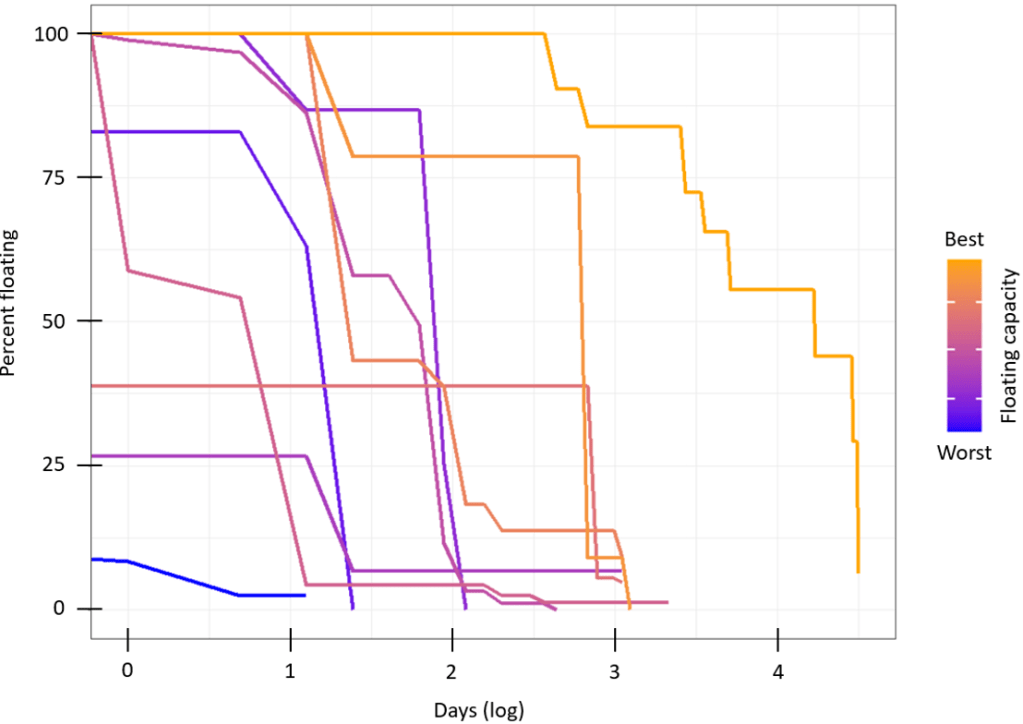
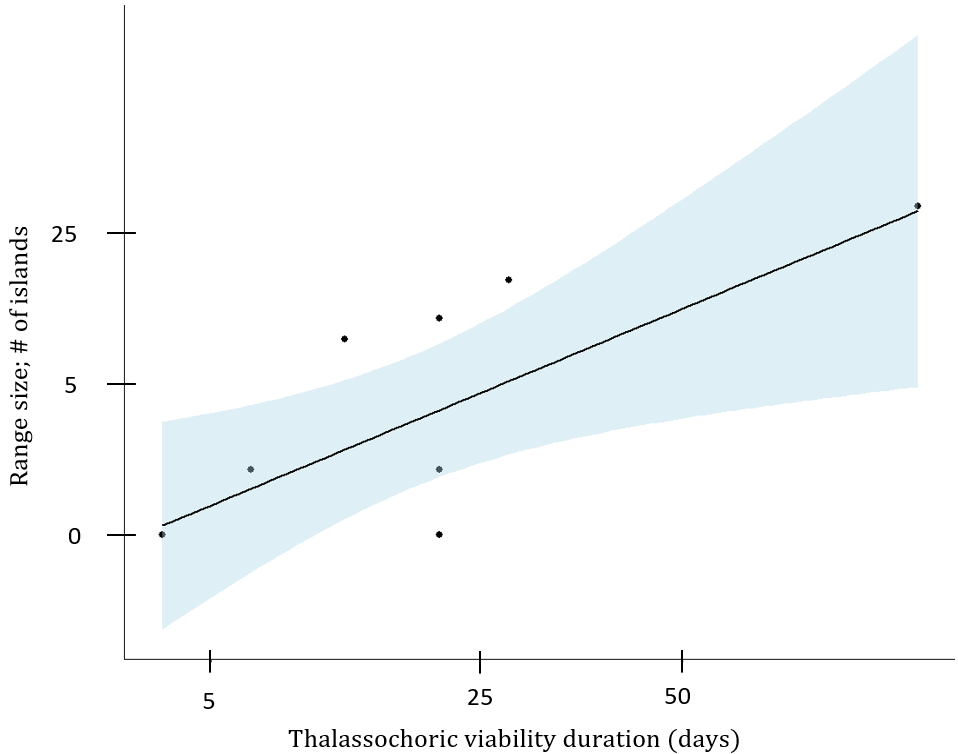
Floating potential of various species (left) and the positive correlation between range size and thalassochoric dispersal potential of study species (right)
Acknowledgements
I would like to thank my co-authors: Sofany Montoya, Fabio Tarazona, Christina Chavez, Joanna Tucker Lima, Donald Olson, and Christopher Searcy

