UF/IFAS Assessment of Non-Native Plants
2024- Current
Florida is simultaneously one of the most biodiverse and vulnerable areas in the United States. Having 30+ points of entry, hundreds of millions of visitors per year, and tropical to subtropical climates, Florida has at least 1,400 non-native plant species. To help protect natural and agricultural areas from invasive species, the UF/IFAS Assessment of Non-native Plants (henceforth UF/IFAS Assessment) in Florida’s Natural Areas uses literature and expert-based assessment tools to evaluate invasion risk of non-native plant species in Florida and throughout the Southeast US. We use multiple tools like the Predictive Tool (Gordon et al. 2008) to assess invasion risk of non-native species that occur in the state, new species proposed for introduction, and novel agricultural and horticultural cultivars. Through our website, we provide the latest descriptions, categorizations, and recommended uses of non-native plants in Florida. As of 2026, we have assessed 1000+ species and identified 400+ high-risk, invasive, or prohibited plants. We also collaborate with external partners in recommending species to the state noxious weed list, which would legally prohibit their sale and encourage removal from landscapes.
Highlights
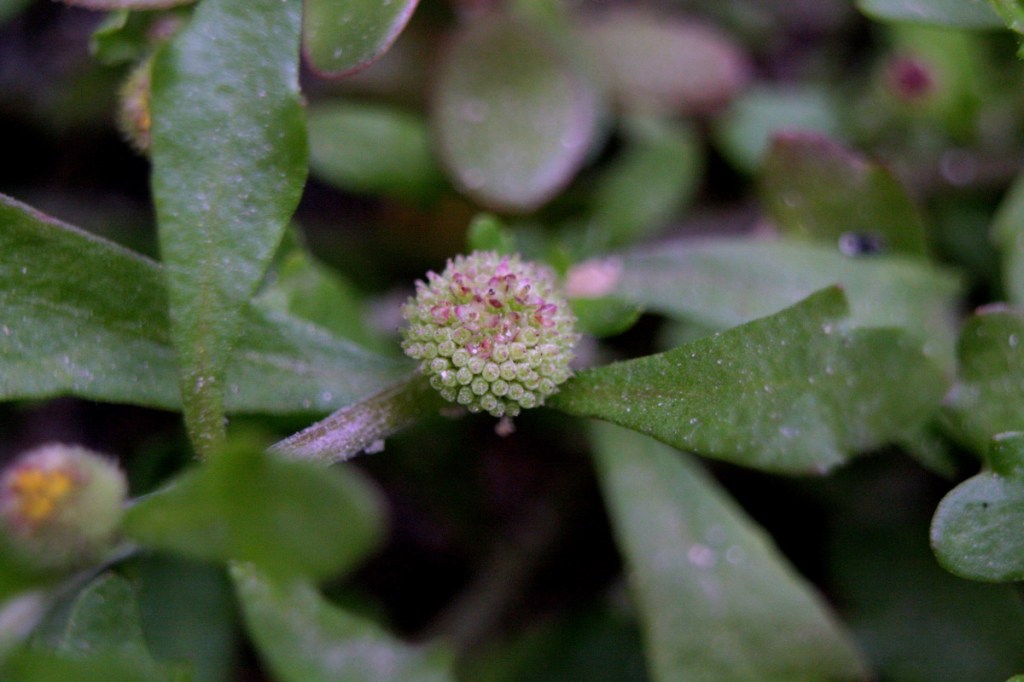
Spreading sneezeweed (Centipeda minima)
This plant was referred to me by land managers at St. Lucie county in southern Florida. They had never encountered this species before and asked me to do an assessment of it. We found that it had very high climatic suitability for the region as well as having highly invasive characteristics such as broad climatic suitability, ability to spread long distances through hydrochory and zoochoric means and being considered a weed along waste lands and roadsides elsewhere in the world. Due to these factors, we classified this plant as having high invasion risk. With this assessment, land managers of St. Lucie county immediately removed the small population they saw and placed it within their Early Detection and Rapid Response (EDRR) list, prioritizing the removal of this plant in the future.
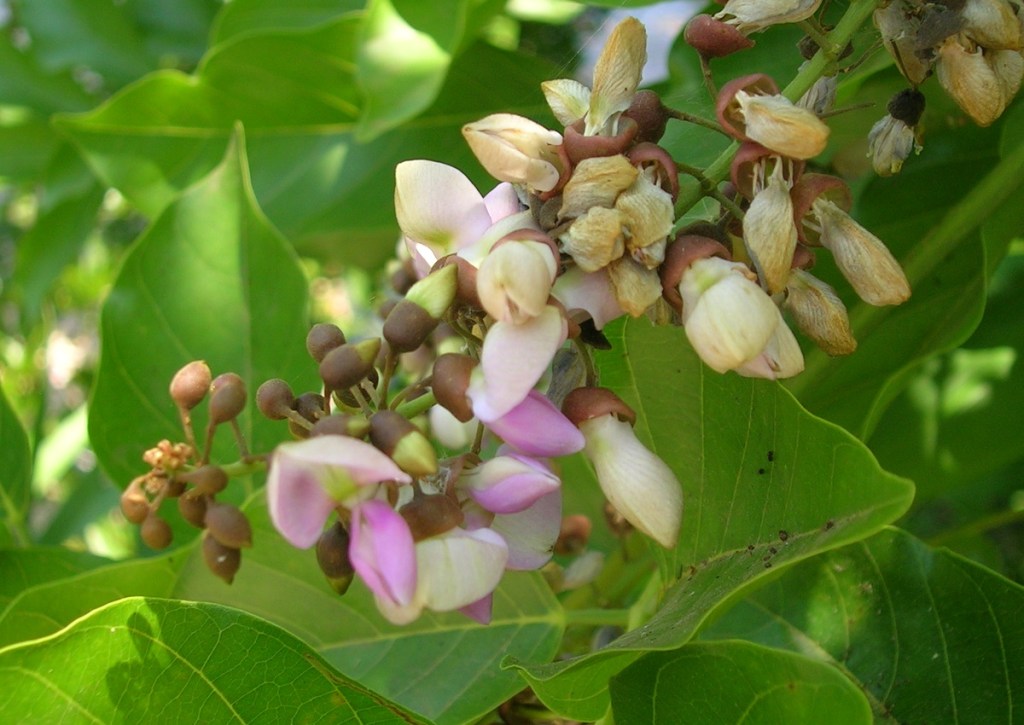
Pongamia (Millettia pinnata)
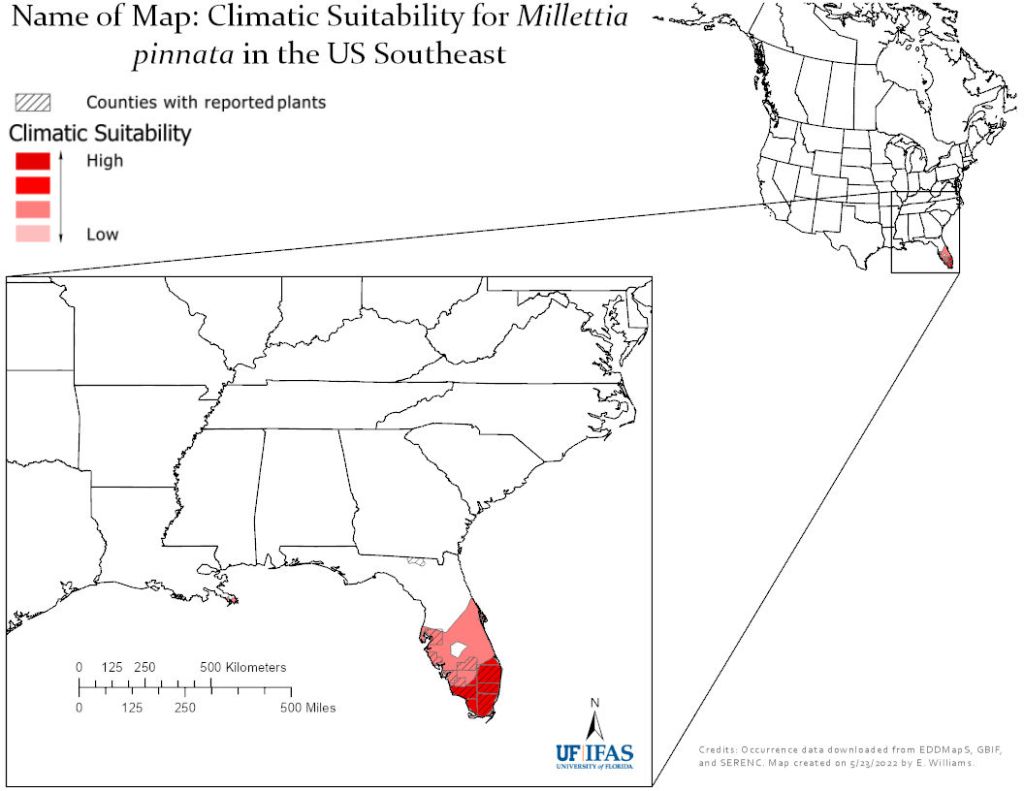
This plant is a fast-growing, subtropical, leguminous tree that has been considered as an agricultural and ornamental plant in Florida. My predecessor, Dr. Deah Lieurance previously assessed this plant as High Invasion Risk given its ability to spread along waterways and its toxic nature (among others). She invited me to help publish a manuscript that details through field surveys how this plant is rapidly spreading along various natural waterways in southern Florida (Kim et al., 2026). This survey proves how this plant is established in southern Florida and is being invasive. Given this evidence, I worked with the Florida Fish and Wildlife Commission (FWC) to petition and place this plant on the state noxious weed list, legally prohibiting the sale or movement of this plant except under specific permitting conditions.
Created a new geospatial model (Proto4) for weed risk assessments
“Proto3” is a geospatial model used by the USDA Plant Protection and Quarantine to predict potential distributions of non-native weeds in the continental U.S. for weed risk assessments. It is simple, accessible, and reproducible but tends to overestimate species ranges. I worked with collaborators from the USDA and North Carolina State University to develop “Proto4,” an updated model that improves precision while retaining Proto3’s mechanistic framework. Both models combine Plant Hardiness Zones, precipitation, and Köppen-Geiger climate classes with global species distributions, but Proto4 uses finer-scale climate layers, adds elevation as a fourth variable, and incorporates uncertainty to better distinguish suitability levels. Comparing Proto3 and Proto4 across 30 widespread invasive plants in the U.S., Proto4 reduced predicted distributions by an average of nearly 780,000 km²—larger than Texas—while missing fewer than 0.5% more occurrence points. By improving spatial precision and incorporating uncertainty, Proto4 offers a more informative tool for invasive species prevention and management prioritization (Kim et al., 2023).
The UF/IFAS Assessment’s efforts depend strongly on interested stakeholders, who suggest new species for assessment and provide insight into the invasion status of species currently in the state. I gave multiple in person and virtual talks detailing the work that we do (see a recorded webinar here), but there is still more collaborations that can occur. Therefore, if you are reading this, I ask you to join our efforts in combatting the threat of invasive plants in Florida and elsewhere. This can be as simple as visiting the assessment website (https://assessment.ifas.ufl.edu) to check for a species’ invasion risk / status or requesting us to look into a plant that is not in the database yet. If you are in Florida, you can also sign up to join a list of local experts here. One of our many tools require us to ask people who are familiar with how a species is behaving in the field so we can better understand if it is behaving invasive now. If you sign up for this, I may reach out to you in the future to ask you specific questions about the plant in your area.
Given the continued proliferation of non-native plants within the context of changing climates, such risk assessments programs remain vital to combatting and managing potential invasives before they become a true threat to our natural and agricultural areas.
Click here for a video presentation of the poster I presented at various meetings:
References:
Gordon, D. R., Onderdonk, D. A., Fox, A. M., Stocker, R. K., & Gantz, C. (2008). Predicting invasive plants in Florida using the Australian weed risk assessment. Invasive Plant Science and Management, 1(2), 178-195.
Kim, S., Koop, A., Fowler, G., Israel, K., Takeuchi, Y., Lieurance, D. (2023). Addition of finer scale data and uncertainty analysis increases precision of geospatial suitability model for non-native plants in the US. Ecological Modelling, 484, 110458. https://doi.org/10.1016/j.ecolmodel.2023.110458
Kim, S., Brym, Z., Murphy, M., Sthreshley, M., Lieurance, D. (in press; 2026). Invasiveness of pongamia, Millettia pinnata (L.) Panigrahi, in South Florida: an observational report. BioInvasions Records, 15.


